If you’re applying for a Schengen visitor visa (especially to visit a European partner), it’s easy to feel like approvals are random. One couple gets approved with less money, another gets refused even with “many documents.”
The reality is simpler: refusals usually happen when the embassy sees
risk,
confusion, or
inconsistency. This article breaks down the most common reasons Schengen visas get rejected, in plain language.
1. Weak return intention (the biggest reason)
The embassy must be convinced the applicant will return home after the trip. If they don’t believe that, everything else becomes irrelevant.
Typical red flags include:
- No stable job, business, or school commitments
- No clear responsibilities in the home country
- Long stay requested with weak explanation
- Travel plan that looks like an undeclared relocation
How to reduce this risk: show strong ties (work, studies, family responsibilities, property, ongoing obligations) and make the trip length realistic.
2. Unclear or unrealistic purpose of travel
Embassies reject applications when the purpose sounds vague, contradictory, or unrealistic.
- Itinerary doesn’t match the stated purpose
- Travel dates don’t match leave approval, accommodation, or finances
- No clear plan of what the applicant will actually do
Fix: keep the purpose simple, consistent, and supported by documents (invitation letter, itinerary, accommodation, and dates that align).
3. Financial proof that doesn’t make sense
Many refusals happen because the financial story looks weak or confusing, not because the applicant is “poor.”
Common problems:
- Bank statement shows sudden large deposits with no explanation
- Declared sponsor but no clear sponsorship statement
- Income level doesn’t match the trip cost
- Missing or inconsistent financial documents
Fix: present a clean, logical financial story. If someone sponsors the trip, make it explicit and attach matching proof (bank statements, income proof, sponsorship letter if needed).
4. Weak or messy relationship proof
If the purpose is visiting a partner, the embassy will assess whether the relationship looks genuine and stable.
Refusals often happen when:
- The relationship story is vague or inconsistent
- There are too many random screenshots with no structure
- Key details don’t match across documents (dates, names, timeline)
- The couple avoids explaining obvious facts (kids, prior marriage, how they met)
Fix: use a clear timeline, selected proof, and consistent wording across all letters and documents. Structure matters more than quantity.
5. Inconsistencies and contradictions
This is one of the fastest ways to get refused. Embassies review hundreds of applications — inconsistencies are a major warning signal.
Examples:
- Different travel dates in different documents
- Different purpose stated in different letters
- Accommodation mismatch (hotel in itinerary, home address in letter)
- Financial claims that don’t match bank statements
Fix: check your application as one complete “story” — everything should align.
6. Missing core documents or poor document quality
Sometimes refusals happen for a simple reason: key documents are missing, outdated, or unclear.
- Incomplete forms
- Missing required translations (where applicable)
- Blurry scans, missing pages, unreadable stamps
- Documents that don’t match the checklist for that country
Fix: follow the official checklist carefully, and ensure every scan is readable and complete.
7. Overexplaining, emotional letters, and “too much” evidence
This surprises many couples: adding more pages does not always help.
Problems include:
- Long emotional letters instead of clear facts
- Flooding the application with unnecessary screenshots
- Trying to “convince” with drama rather than structure
Fix: keep everything calm, factual, and well-structured. Let the documents speak clearly.
How to avoid these mistakes the smart way
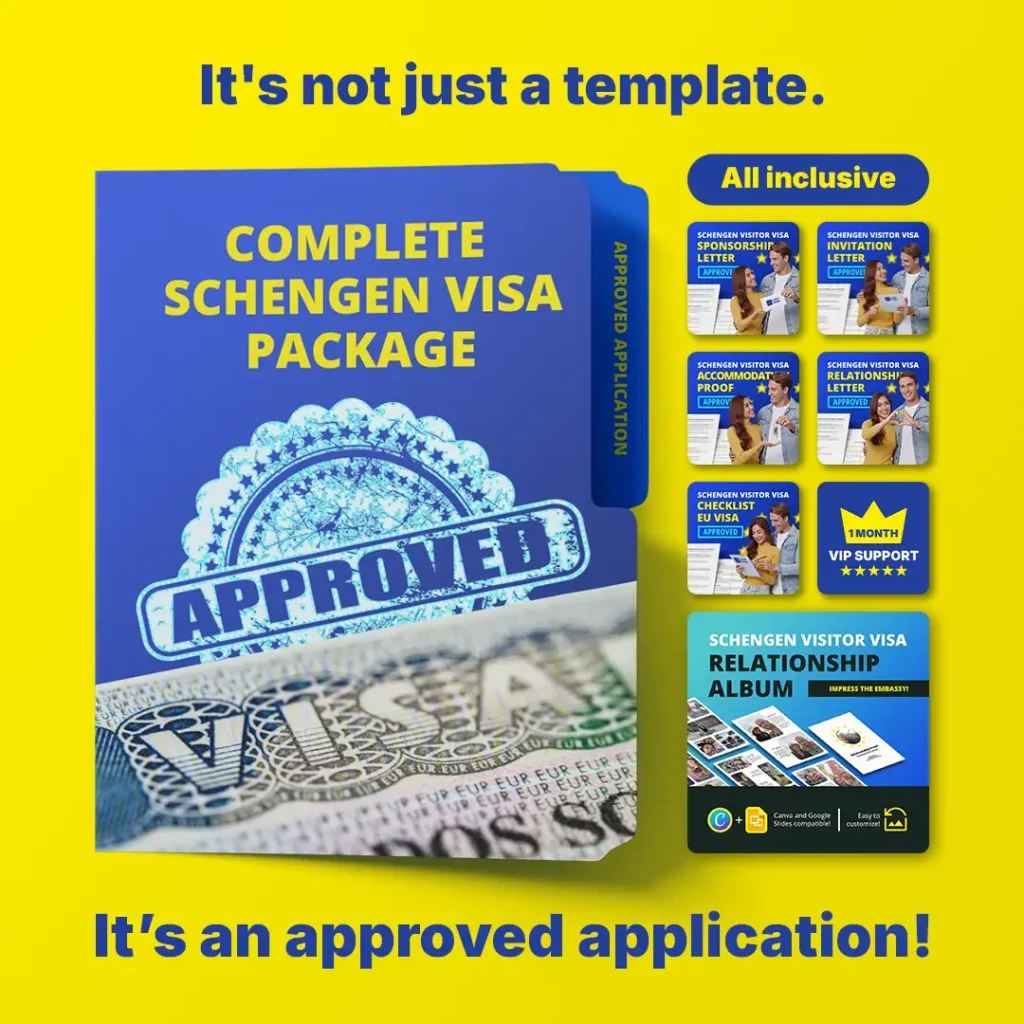
The easiest way to avoid the most common refusal reasons is to base your application on a real, approved structure instead of guessing.
That’s exactly why we created the
Approved Genuine Schengen Visa Application.
It shows what a complete, embassy-ready application looks like — including the key letters, structure, and supporting documents — so you can model your own case with confidence and avoid the mistakes that cause refusals.